PIA’s $482 Million Hand-Off: What Pakistan’s Landmark Privatization Means for the Airline
Pakistan has finalized the privatization of Pakistan International Airlines (PK), selling a 75% stake in the flag carrier for Rs 135 billion (about $482 million) following a competitive, televised auction process in Islamabad (ISB). It’s one of the country’s biggest divestments in recent memory—and for an airline that has spent years on financial life support, it’s also a hard pivot in how PIA will be managed, funded, and (ideally) rebuilt.
The headline valuation is only half the story. The deal structure—how debt was carved out, how proceeds will be used, and what the buyer must invest—will determine whether this is simply a change of ownership or the start of an operational turnaround that passengers will actually notice at Karachi (KHI), Lahore (LHE), and Islamabad (ISB).
How the Islamabad (ISB) Auction Was Won
Three pre-qualified bidders entered the process, submitting sealed offers before the auction moved into a live bidding phase. The winning offer came from an Arif Habib–led consortium, which ultimately reached Rs 135 billion, clearing the government’s Rs 100 billion minimum and beating out rival bids that included a group led by Lucky Cement and a bid connected to Airblue.
Read our stories in your inbox
Two aviation newsletters. Zero fluff.
The public, broadcast format wasn’t incidental—it was designed to reassure markets and the public after earlier privatization efforts struggled to close. The government needed this to look transparent, decisive, and final. This time, it did.
What Was Actually Sold—and the 90-Day Path to the Rest
Pakistan offered 75% up front, handing immediate control to the buyer rather than creating a long, uncertain phased transition. Under the agreed terms, the new investor has a defined window to acquire the remaining 25%, moving PIA toward full private ownership rather than a long-term mixed-control model.
That matters operationally. Airlines don’t modernize on “maybe” governance—fleet plans, staffing reforms, product investments, and network rebuilding typically require clear authority and a single strategic direction.
The Deal Structure: A Financial Reset, Not Just a Sale Price
Privatizing a legacy carrier is rarely about the winning bid alone—it’s about making the airline investable.
Pakistan shifted a large portion of PIA’s legacy liabilities off the airline’s books ahead of the transaction, widely reported as hundreds of billions of rupees. The intent was straightforward: bidders could price the airline’s future, not decades of accumulated debt and obligations.
The proceeds are also structured in a way meant to prioritize recovery over treasury intake. A large majority of the sale proceeds is expected to be reinvested into the airline, with only a smaller portion flowing to the federal government. Additionally, the new owner is required to commit fresh capital over multiple years—a safeguard meant to prevent a “paper privatization” where ownership changes but the airline’s fleet availability, reliability, and product remain unchanged.
Fleet Reality: What the New Owner Inherits on Day One
PIA’s fleet mix tells you what kind of airline it can be in the near term—and what will be expensive to fix.
Widebody: Boeing 777 family
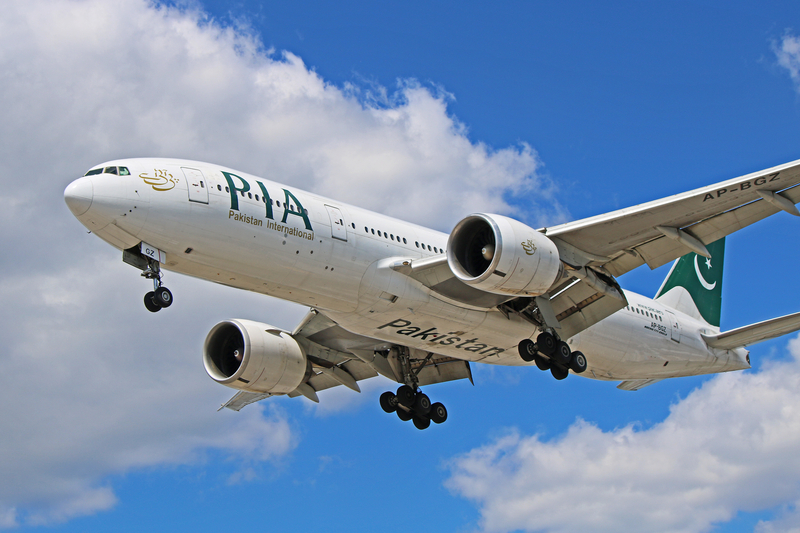
PIA’s long-haul flying is built around the Boeing 777, including 777-200ER and 777-200LR variants, and it has also operated 777-300ER aircraft. The 777-200LR is the standout technically—built for ultra-long-range missions—while the -300ER is a high-capacity tool when demand, cargo, and slots justify it. The catch is that widebodies magnify everything: maintenance planning, dispatch reliability, crew scheduling, and cash burn when an aircraft goes AOG.
Narrowbody: Airbus A320 family
The A320 fleet is the backbone for domestic trunk routes and regional flying—think the high-frequency corridors that matter most for reputation and repeat business out of KHI, LHE, and ISB. If PIA becomes “predictable” again, it will happen first on the A320 schedule.
Turboprop: ATR 42
ATR operations can be a strategic asset for thinner domestic markets where jets don’t make economic sense. But turboprops require disciplined parts support and maintenance planning; otherwise, they become the first place reliability unravels.
The immediate question for the new owners isn’t just “what to buy next,” but how to make the existing fleet reliably usable—because consistent aircraft availability is what unlocks schedule integrity, and schedule integrity is what restores pricing power.
Network Upside: Europe and the UK Are Back on the Board
A major constraint on PIA’s revenue potential over the past few years wasn’t simply demand—it was access.
Following improvements in oversight and compliance, PIA has been rebuilding international reach, including:
-
A return to Paris Charles de Gaulle (CDG) service from Islamabad (ISB) in 2025.
-
A resumption of UK operations with Islamabad (ISB)–Manchester (MAN) flights in late 2025.
Those routes matter because they sit in the overlap of diaspora travel, premium VFR demand, and meaningful cargo opportunity—precisely the mix that can support widebody economics if reliability is strong and the product is consistent.
The Hard Part Starts Now: Labor, Reliability, and Trust
PIA’s challenges have been structural for a long time: political interference, inconsistent operational performance, and chronic cost issues. One number often cited to illustrate the problem is staffing intensity—PIA has operated with an employee-to-aircraft ratio far above what well-run carriers target.
Private ownership doesn’t magically solve that. But it does change what’s possible. A credible turnaround plan typically focuses on:
-
Dispatch reliability (fewer cancellations, fewer last-minute swaps, better recovery)
-
Fleet utilization (more hours flown per aircraft per day, without breaking maintenance)
-
Commercial credibility (customers trusting that PK flights will operate as scheduled)
-
Network discipline (flying routes that make money, not routes that make headlines)
If passengers at KHI, LHE, and ISB start noticing fewer irregular operations and tighter on-time performance, that’s when privatization becomes real—not when the bid is announced on television.
Bottom Line
Pakistan has sold 75% of Pakistan International Airlines (PK) for Rs 135 billion (about $482 million) in a landmark privatization completed in Islamabad (ISB). The real significance lies in the mechanics: legacy liabilities were moved off the airline’s books, most proceeds are positioned to support a rebuild, and the buyer is required to inject new investment over the coming years.
Now the clock starts on execution—stabilizing fleet availability across the Boeing 777 and Airbus A320 operations, restoring passenger confidence at key hubs like Karachi (KHI), Lahore (LHE), and Islamabad (ISB), and turning regained access to markets like Paris (CDG) and Manchester (MAN) into durable, profitable flying.
Keep reading FlyMag
Get the Daily Brief in the morning or the Route Watch weekly recap on Fridays. Or both.