New Route: Is This The US’ Most Grueling Boeing 737 Itinerary?
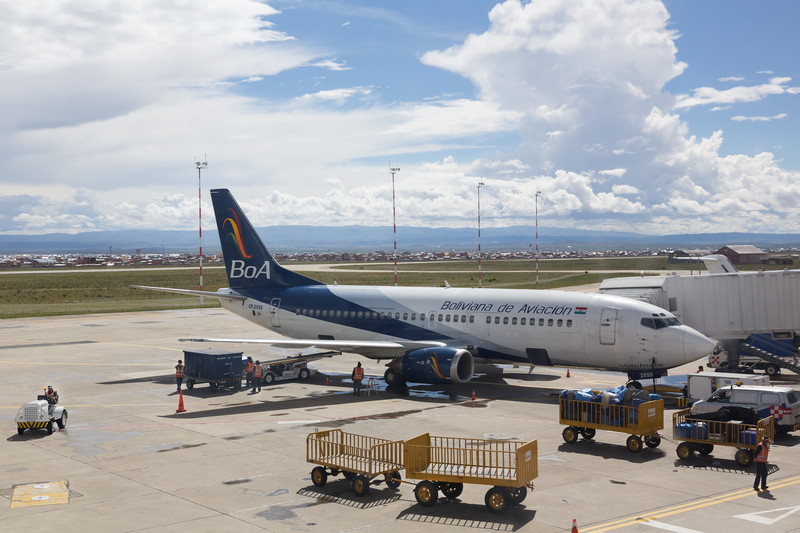
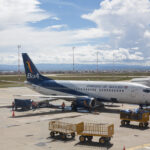
Bolivia’s flag carrier, Boliviana de Aviación (BoA), has quietly added an eye-catching new U.S. link—one that looks more like a ferry mission than a typical scheduled service.

On December 16, 2025, BoA began flying from Santa Cruz de la Sierra’s Viru Viru International Airport (VVI) to Washington Dulles International Airport (IAD), with a technical stop in Panama City at Tocumen International Airport (PTY) in both directions. The flight is operated by a Boeing 737-800, and it’s scheduled only for a short window around the holiday peak—exactly the kind of seasonal experiment that can tell you a lot about an airline’s strategy (and its constraints).
VVI–PTY–IAD: A Narrowbody Stretch That Adds Up Fast
On paper, this isn’t a single 10-hour sector—it’s two segments with a short refueling stop. But for passengers, it behaves like one long-haul journey on a single-aisle jet:
-
VVI–PTY: ~1,865 nautical miles
-
PTY–IAD: ~1,790 nautical miles
-
Total routing distance: ~3,655 nautical miles
That total is the headline: you’re effectively covering transatlantic-like mileage on a 737-800, an aircraft designed primarily for medium-haul missions. The 737-800 can have a published still-air range around the low-3,000 nautical mile mark depending on configuration and assumptions, but real-world operations require reserves, alternate planning, and performance margins. Add winter winds and you quickly understand why PTY is non-negotiable on this routing.
The Schedule: Built Around a Fast Turn in PTY
BoA filed the route as twice weekly with consistent timings that emphasize a quick refuel and onward departure.
OB760 (VVI–PTY–IAD)

-
VVI 09:30 → PTY 13:10
-
PTY 13:50 → IAD 18:40
OB761 (IAD–PTY–VVI)
-
IAD 20:05 → PTY 00:55 (+1)
-
PTY 01:35 (+1) → VVI 07:15 (+1)
That ~40-minute Panama City (PTY) ground time is tight by design. It’s long enough for fuel, paperwork, and a basic service reset—yet short enough to keep the whole itinerary competitive against one-stop itineraries via larger connecting hubs.
Whether passengers stay onboard at PTY or are required to deplane can vary by local procedures and operational considerations, but in either scenario, this is not a leisurely layover. It’s a pit stop.
Why a 737-800—And What That Means for the Cabin
BoA’s choice of aircraft is a big part of why this route stands out.
The Boeing 737-800 is a proven workhorse: reliable, widely supported, and economical for thinner long-haul demand—if you can break the trip into segments. BoA’s 737-800s are configured all-economy with 168 seats, a dense layout that makes sense for many South American regional markets but changes the equation when you start stringing together long stage lengths.
For travelers, the biggest practical considerations are straightforward:
-
A single-aisle cabin for “widebody-length” travel time. Even if each sector is manageable, the cumulative effect matters.
-
Limited onboard amenities compared with long-haul widebodies. On many carriers, this is the difference between a trip that feels merely long versus one that feels truly punishing—especially on overnight returns.
-
Bring-your-own entertainment is the safest assumption. If a route like this is on your radar, travelers will want to confirm power options, connectivity availability, and IFE expectations before assuming anything beyond the basics.
BoA does operate widebodies on some longer international routes, but the 737-800 gives the airline the ability to test demand into IAD without betting the economics of a larger aircraft on a market that may be highly seasonal.
The Network Logic: VFR Demand, Strategic Geography, and a Short Trial Period
From a network-planning perspective, the move is easier to understand than it first appears:
-
IAD is a strong inbound/outbound international gateway with wide catchment, Star Alliance/other connectivity, and infrastructure designed for long-haul flows.
-
VVI is BoA’s key international platform, positioned to aggregate demand beyond Santa Cruz itself.
-
PTY is one of the most operationally practical stop points in the region—a major hub airport with robust 24/7 handling capability and a location that breaks the mission into two realistic stage lengths for the 737-800.
The most telling detail isn’t the aircraft type—it’s the calendar. BoA shortened the initial operating window to run only from December 16, 2025 to January 8, 2026, indicating a high-confidence bet on holiday demand but a lower appetite for sustained winter flying if yields or loads aren’t there. The schedule filings also show the airline intends to bring the route back on a seasonal basis in Northern Summer 2026.
In other words: this looks like a controlled experiment. Minimal frequency, peak-season timing, and an aircraft choice that limits financial exposure.
Bottom Line
BoA’s new Santa Cruz (VVI) – Panama City (PTY) – Washington Dulles (IAD) service is an unusually long itinerary for a Boeing 737-800, and it’s structured like a pragmatic route test: 2x weekly, built around a quick PTY refuel, and timed for the holiday surge.
For passengers, the appeal is clear—new access between Bolivia and the Washington region without a traditional two-stop routing. For the airline, it’s a disciplined way to probe demand with a narrowbody and see whether the market can sustain something more permanent.