Frontier Airlines Is Leaving Paine Field (PAE) After Just Seven Months
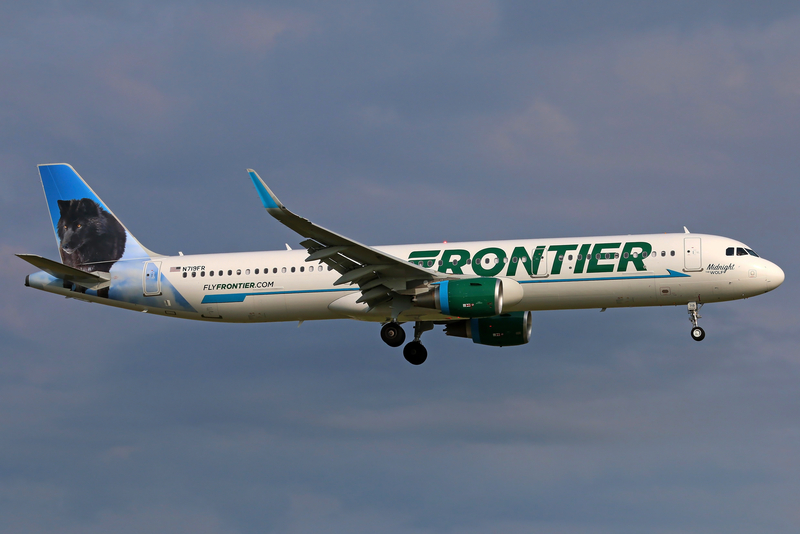
Frontier Airlines’ experiment at Seattle Paine Field International Airport (PAE) is ending almost as quickly as it began. The ultra-low-cost carrier will operate its final flights from Everett’s boutique airport on January 5, 2026, closing out a run that started with considerable fanfare in early summer 2025.

For travelers in Snohomish County and the north side of the Seattle metro area, Paine Field (PAE) has long been the “why fight Sea-Tac?” alternative to Seattle-Tacoma International Airport (SEA). Frontier’s exit is a reminder that convenience alone doesn’t always pencil out—especially when you’re trying to make low-fare economics work at an airport built around premium ease.
Frontier’s Paine Field (PAE) Launch Looked Straightforward On Paper
Frontier entered Paine Field (PAE) on June 2, 2025, with nonstop service to three familiar leisure-and-connection markets:
-
Denver International Airport (DEN)
-
Phoenix Sky Harbor International Airport (PHX)
-
Las Vegas Harry Reid International Airport (LAS)
The schedule was built around three flights per week on each route—enough to create a presence, but not enough to feel “daily reliable” for most business travelers or frequent flyers.
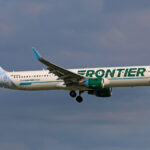
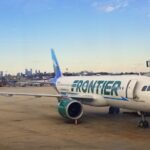
From an aircraft standpoint, Frontier is an Airbus A320-family operator. That matters because the ULCC model is heavily dependent on high utilization and dense seating. Frontier’s A320-family jets are designed to move a lot of people efficiently with fast turns—great at a big, low-cost operation where gates, ground equipment, and staffing are optimized around that pace.
But Paine Field (PAE) isn’t that kind of airport.
A quick sense of the flying involved:
-
PAE–DEN is roughly 900 nautical miles (about 1,035 miles / 1,665 km)
-
PAE–PHX is roughly 985 nautical miles (about 1,133 miles / 1,824 km)
-
PAE–LAS is roughly 777 nautical miles (about 894 miles / 1,439 km)
These are very workable stage lengths for A320-family aircraft—long enough to generate revenue, short enough to keep a narrowbody productive.
So why didn’t it stick?
Paine Field (PAE) Is Built For Convenience, Not Volume—And That’s A Tradeoff
Paine Field (PAE) has a unique identity. It’s a serious aviation facility—famously tied to Boeing’s widebody history and today’s Everett manufacturing footprint—yet its commercial passenger terminal is intentionally small and curated. That’s part of the appeal: short walks, quick processing, and a quieter experience compared to Seattle-Tacoma (SEA).
But for an ultra-low-cost carrier, the pressure points show up fast:
Frequency matters more than you think
Three flights a week to Denver (DEN), Phoenix (PHX), and Las Vegas (LAS) can work for leisure travelers—until it doesn’t. If the day-of-week pattern doesn’t match demand, loads wobble. And once loads wobble, ULCC yields don’t have much cushion.
SEA (and sometimes PDX) is a relentless competitor
Seattle-Tacoma (SEA) is only about 30-ish miles away, and it offers massive frequency advantages. If Frontier can sell more seats with better aircraft utilization out of SEA, the network math usually wins—especially when the airline can consolidate staffing and operational support.
The ULCC model needs “cheap and repeatable”
Airports like Paine Field (PAE) are fantastic for travelers, but they’re not always built to be the cheapest place for an airline to operate. ULCCs live and die on cost per departure, predictable turns, and scale efficiencies. A boutique terminal is a feature for passengers—but not always a feature for an airline trying to shave every possible dollar off its operation.
Frontier has indicated it may evaluate a return to Paine Field (PAE) in the future. In airline-speak, that usually means “not right now,” but it does leave the door open if market conditions shift or if the carrier wants to redeploy aircraft seasonally.
What Paine Field (PAE) Looks Like Without Frontier
Frontier’s departure effectively returns Paine Field (PAE) to being an Alaska-centric airport. Alaska Airlines has built a meaningful niche there, with service that’s largely aimed at West Coast business/leisure flows and key warm-weather markets.
Current and recently announced Alaska routes from Paine Field (PAE) include a mix of familiar names such as:
-
Phoenix (PHX) and Las Vegas (LAS) (both of which Frontier also served)
-
Select California leisure airports like Orange County / John Wayne (SNA) and Palm Springs (PSP)
-
And longer-haul flying to Honolulu (HNL)
The most interesting near-term add is Alaska’s planned Paine Field (PAE)–Portland (PDX) route starting in June 2026. At about 140 nautical miles (roughly 161 miles / 259 km), it’s a short hop—but strategically, it plugs Paine Field (PAE) into Alaska’s growing Portland (PDX) hub and gives the airport more connective value.
Aircraft-wise, Alaska’s Paine Field (PAE) flying often leans heavily on the Embraer E175 for thinner routes. That jet is a favorite among frequent flyers for one simple reason: no middle seats in its 2–2 layout. Typical Alaska/Horizon E175 cabins also include a small first class section and a main cabin that feels more “right-sized” for developing markets—exactly the kind of aircraft that can succeed where a larger narrowbody might struggle.
What This Means If You’re Flying Frontier From Paine Field (PAE)
If you already have Frontier tickets from Paine Field (PAE) beyond early January 2026, expect one of the standard outcomes: rebooking to another departure airport (often Seattle-Tacoma (SEA)), a schedule change offering alternatives, or a refund option depending on the fare rules and how the cancellation is processed.
For travelers who liked Frontier specifically for price, the practical reality is that the lowest fares will likely shift back to Seattle-Tacoma (SEA), where Frontier has far more network depth and flexibility.
Bottom Line
Frontier’s exit from Paine Field (PAE) after a short run underscores a reality that often gets overlooked: a great passenger experience doesn’t automatically translate into a great ULCC business case. The routes to Denver (DEN), Phoenix (PHX), and Las Vegas (LAS) were logical, the aircraft was suitable, and the airport is easy to love—but the economics of limited frequency, minimal scale, and intense competition from Seattle-Tacoma (SEA) can overwhelm a low-fare strategy quickly.
The upside for Paine Field (PAE) is that it remains a strong Alaska Airlines outstation with a clear identity—and with the upcoming Paine Field (PAE)–Portland (PDX) link, the airport’s role as a convenient, connectivity-friendly alternative to SEA may actually become more defined, not less.