Southwest Adds Las Vegas-Hilo Nonstop, Bringing Mainland Service Back To Hawaii Island
Southwest Airlines is planning a notable Hawaii expansion next summer: a new nonstop linking Las Vegas (LAS) with Hilo (ITO) on the east side of Hawaii Island. Service is scheduled to begin on Thursday, August 6, 2026, restoring something Hilo hasn’t had in years—a direct link to the U.S. mainland.

For travelers, it’s a simple proposition: skip the usual Hawaii hub connection, land closer to Hilo’s rainforests and waterfalls, and still keep easy access to Southwest’s large connecting bank at LAS.
Schedule, Frequency, And What The Timings Tell Us
Southwest is currently scheduling the route three times weekly—Mondays, Thursdays, and Fridays—using the Boeing 737 MAX 8.
Planned schedule (local times):
-
LAS → ITO: 9:30 a.m. departure, 12:35 p.m. arrival
-
ITO → LAS: 8:45 p.m. departure, 5:10 a.m. arrival (next day)

Those clock times also hint at the route’s real-world rhythm. Hawaii doesn’t observe daylight saving time, so in August there’s typically a three-hour time difference between LAS (Pacific time) and ITO (Hawaii time). Backing that out, Southwest is effectively scheduling a little over six hours westbound and around five-and-a-half hours eastbound, which is consistent with typical wind patterns and routings over the Pacific.
Just as importantly, these are connection-friendly times at LAS. A mid-morning departure lets passengers feed in from earlier arrivals, while the early-morning return into LAS sets up same-day onward options across Southwest’s domestic network.
Why This Route Matters: Hilo (ITO) Returns To The Mainland Map
This is the biggest headline: Hilo (ITO) hasn’t had mainland nonstop service since United ended Los Angeles (LAX)–Hilo (ITO) in early 2023. Since then, most “mainland to Hilo” itineraries have required at least one connection—often via Honolulu (HNL), Kahului (OGG), or Kona (KOA).

Southwest’s move changes that instantly. With the LAS–ITO nonstop, the airline is positioned to be the only carrier offering a nonstop between Hilo (ITO) and the contiguous U.S.—at least based on schedules currently in the market.
Aircraft Choice: Why The Boeing 737 MAX 8 Fits LAS–ITO
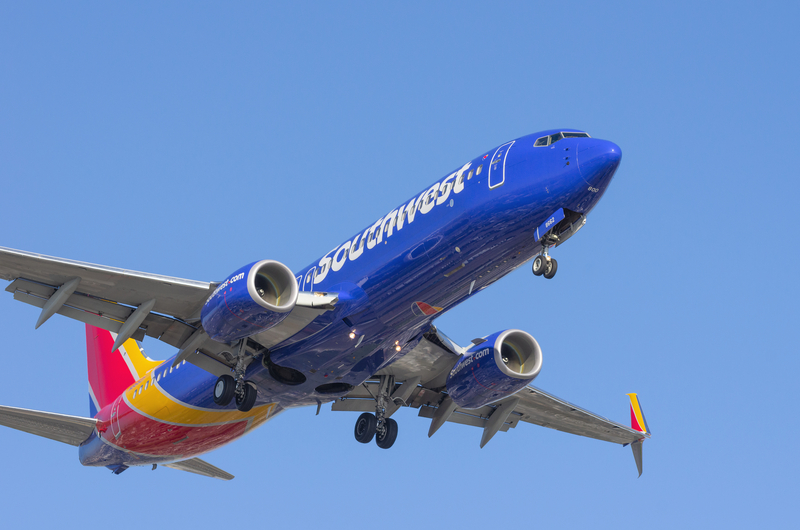
Southwest plans to fly the route on the Boeing 737 MAX 8, the workhorse of its newer overwater operation to Hawaii. In Southwest configuration, the MAX 8 seats 175 passengers in a single-cabin layout—dense enough to keep unit costs low, but not so large that the route needs widebody-level demand to work.
From an operational standpoint, this is also a very “MAX 8” mission:
-
Stage length: roughly 2,300 nautical miles (about 2,660 miles) between LAS and ITO, depending on routing
-
Overwater requirements: Hawaii flying demands robust dispatch planning, specific maintenance and diversion considerations, and crew procedures that differ from routine mainland domestic operations—something Southwest has been building since it entered the islands in 2019
In other words, Southwest isn’t experimenting with an unfamiliar profile here. It’s taking an aircraft type already embedded in its Hawaii strategy and using it to open a market that’s been sitting without a mainland nonstop.
Hilo (ITO) vs. Kona (KOA): The Big Island Split That Drives Demand
Hawaii Island is effectively a two-airport story: Hilo (ITO) on the east side and Kona (KOA) on the west. KOA tends to attract a larger share of resort traffic thanks to the leeward climate and proximity to major hotel areas, while ITO is the natural gateway for travelers heading toward:
-
Hilo town itself and the Hamakua Coast
-
Hawaii Volcanoes National Park access patterns that start from the east side
-
Waterfall and rainforest touring that’s less convenient from KOA
Airport infrastructure matters, too. Hilo (ITO)—formerly General Lyman Field—has a primary runway measuring 9,800 feet, plenty for MAX operations, plus the kind of airfield layout that supports airline service without requiring the scale of a mega-airport.
Southwest’s Hawaii Strategy Keeps Evolving
Southwest entered Hawaii flying in 2019, and it has steadily expanded its island presence since then—both for interisland service and for mainland-Hawaii flying. Adding ITO to its nonstop mainland map also complements what Southwest already sells out of LAS, where the airline already has nonstop service to multiple Hawaii airports.
The Hilo addition is also arriving at a time when Southwest is gradually rethinking the edges of its product. The airline has taken steps toward more “premium-adjacent” offerings—most visibly with plans tied to a future lounge concept at Honolulu (HNL), which would be a first for Southwest if it comes to fruition.
Bottom Line
Southwest’s planned Las Vegas (LAS)–Hilo (ITO) nonstop, launching August 6, 2026, is a meaningful network change for Hawaii Island. It brings mainland nonstop service back to Hilo for the first time since early 2023, uses an efficient 175-seat Boeing 737 MAX 8, and adds a fifth Hawaii nonstop from Southwest’s LAS gateway.
For travelers who prefer Hilo’s side of the island—or for residents who have been living with forced connections for years—this is exactly the kind of route that can reshape how the Big Island is accessed from the mainland.