Spirit Transfers Two O’Hare Gates To American In $30M Deal
Spirit Airlines is trimming its footprint at Chicago O’Hare International Airport (ORD) in a way that matters far beyond a terminal map: the carrier has agreed to transfer two of its four preferential-use gates at O’Hare to American Airlines for $30 million.

For Spirit, the move is a straight cash-and-cost play in Chapter 11—monetize assets it no longer needs and reduce overhead as the network contracts. For American, it’s a rare opportunity to add scarce gate capacity inside its home terminal complex at ORD, with the airline signaling that the extra space will support additional flying and new destinations.
The Deal: Two Gates, $30 Million, And A Smaller Spirit Footprint At ORD
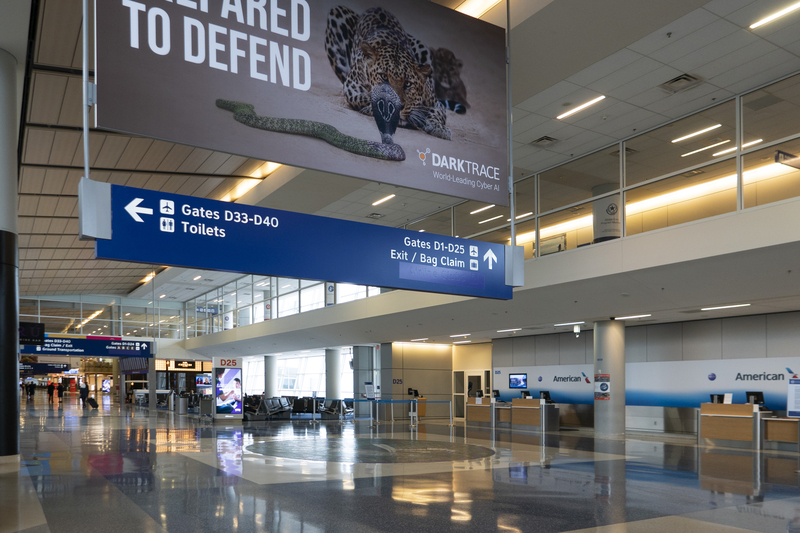
Spirit previously held leases for four preferential-use gates in Terminal 3’s Concourse G at ORD. Under the agreement, two gates transfer to American for $30 million, while Spirit retains the remaining two gates and says it will continue operating at ORD.
At $15 million per gate, this is not a symbolic transaction—it’s a price that reflects just how valuable gate access can be at a capacity-constrained airport, even one that isn’t slot-controlled.
Why Spirit Is Selling: Fewer Departures, Less Need For Gate Real Estate
Spirit’s court filing points to a simple operational reality: when it signed for four gates, it was running roughly 32 peak-day departures at ORD. That figure has since been cut roughly in half. With fewer daily turns, Spirit no longer needs four preferential gates to protect its schedule.

This aligns with Spirit’s broader restructuring posture: cut capacity, simplify the network, and reduce fixed obligations that don’t directly support the remaining operation. Spirit has indicated its fourth-quarter capacity is down more than 34% year-over-year, and gate leases—especially in major airports—are exactly the kind of cost center that becomes hard to justify when flying shrinks.
Operationally, Spirit’s ORD schedule is built around its Airbus A320-family fleet (A320 and A321 variants). These aircraft are optimized for high utilization and quick turns, but gate requirements scale with frequency. When departures fall, the “insurance policy” of extra gates becomes expensive excess.
Why American Wants Them: ORD Growth Needs Hard Infrastructure
American’s Chicago O’Hare (ORD) operation is a hub business, and hub growth is often constrained by the least glamorous part of aviation: gates, ramp space, and turn capacity.
American has framed the acquisition as an investment in its ORD operation and a platform for expanded flying—including “soon-to-be-announced” destinations. The timing is notable as American continues to push for a larger ORD schedule in 2026, targeting 500 peak daily departures in summer 2026 and positioning Chicago as a top-tier hub within its system.
For American’s fleet planners, additional gates unlock flexibility across a broad mix of aircraft:
-
mainline narrowbodies like the Boeing 737 and Airbus A319/A320/A321 families, where utilization is tightly tied to gate availability
-
regional operations (commonly E175-class aircraft) that still require gate turns and ramp coordination, especially during bank structures
At a hub, two gates can be the difference between “we can publish that schedule” and “we can’t make the turns work.”
Preferential-Use Gates: Why They’re So Valuable At ORD
Not all gates are created equal. Preferential-use gates generally give an airline priority access and scheduling control while still allowing the airport to assign the gate when it’s unused. In practice, that “priority” is what matters—especially during irregular operations, peak banks, or when an airline is trying to add frequency without triggering cascading delays.
At a complex airport like ORD, gate access influences:
-
turn times and on-time performance
-
operational recovery during weather events
-
the ability to schedule departures in tight banks (and protect connections)
-
crew and aircraft utilization efficiency
That’s why gate assets trade at meaningful values even when they’re not “owned” outright in the way real estate is—because control over the operation is the real commodity.
What Changes For Passengers At ORD
In the near term, most passengers won’t notice the transaction directly—Spirit will still fly from ORD, and American will simply have more gate capacity to work with.
But the second-order impacts are real:
-
Spirit at ORD becomes a smaller operation by design. With fewer gates, the airline’s ability to rebuild significant frequency in Chicago is limited unless it re-expands leases or finds alternative gate access.
-
American gains room to grow. If American follows through with added destinations and higher peak-day departures, passengers at ORD could see more nonstops and improved bank connectivity.
And for anyone tracking competition at ORD, it’s another example of how the battle is often fought through infrastructure as much as schedules.
Bottom Line
Spirit’s $30 million transfer of two ORD gates to American is a classic Chapter 11 move: shed non-core assets that no longer match the resized network while bringing in cash and reducing fixed commitments. For American, it’s a strategic win—more gate control at Chicago O’Hare (ORD) at a moment when the carrier is actively building toward a larger hub schedule.
Spirit will still operate at ORD with two remaining gates, but the message is clear: this is a leaner Spirit in Chicago—and a better-positioned American.