IndiGo’s Crew Crisis Triggers DGCA Warning & Fare Caps Across India
IndiGo Comes Under Regulatory Fire
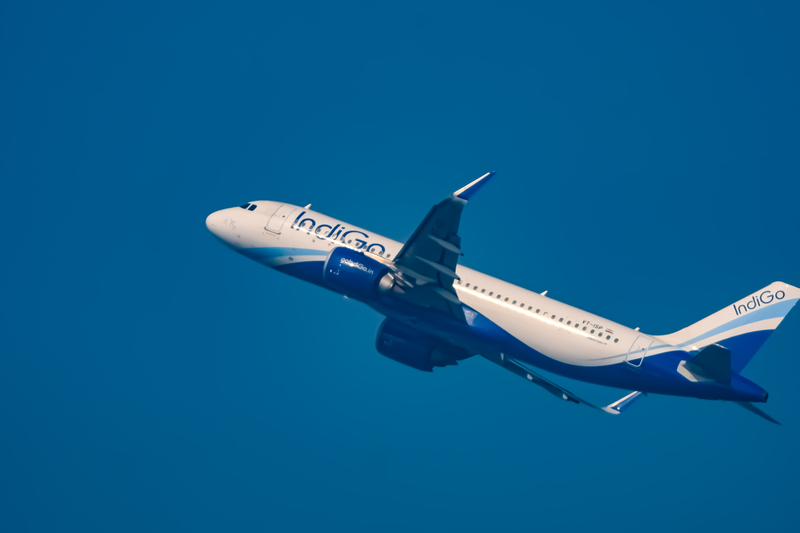
India’s largest airline, IndiGo, is facing intense scrutiny from the Directorate General of Civil Aviation (DGCA) after a severe operational meltdown caused mass cancellations and delays across its domestic network.

The disruption has largely been driven by a shortage of available crew, linked to new crew duty time rules that IndiGo struggled to implement without major schedule disruption.
According to reports from Reuters, the DGCA has given IndiGo 24 hours to explain why regulatory action should not be taken, formally warning CEO Pieter Elbers that the airline has failed to ensure “reliable operations” for passengers.
While operations are slowly improving at key airports like Delhi (DEL), other stations across India are still seeing significant cancellations and delays.
Thousands Of Flights Cancelled In Less Than A Week
The scale of disruption has been massive:
-
IndiGo operates roughly 2,300 flights per day.
-
On Friday, the airline reportedly cancelled nearly 1,600 flights – close to 70% of its daily schedule.
-
On Saturday, it cancelled over 800 flights, around 34% of total operations.
Current figures suggest 221 flights were cancelled at Delhi (109) and Mumbai (112) alone on one day, underscoring just how badly the network has been affected.
The timing couldn’t be worse: this is a peak travel period in India, with demand already high and alternative options limited.
Government Response: Fare Caps & Extra Trains
With chaos at airports and demand spilling over to other airlines, the Indian government has stepped in to protect consumers and stabilize the wider transport system.
Two key moves have been announced:
1. Temporary Exemption From New Crew Duty Rules
The government has granted a temporary exemption from the new crew duty time regulations that originally triggered IndiGo’s staffing crunch. This is meant to give airlines breathing room to adjust rosters without collapsing their schedules.
2. Fare Caps To Stop Price Gouging
To prevent competitors from exploiting stranded IndiGo passengers, temporary fare caps have been imposed on domestic routes:
-
Flights up to 500 km: maximum INR 7,500 (~$83) one-way
-
Flights 1,000–1,500 km: maximum INR 15,000 (~$167) one-way
This covers busy sectors like Delhi–Mumbai (DEL–BOM), where some fares had reportedly surged above INR 20,000 (~$227) before the cap, including on Air India.
3. Extra Rail Capacity As A Safety Valve
To give disrupted passengers an alternative, the government has also turned to the rail network:
-
89 additional trains have been scheduled
-
Over 100 extra trips planned
-
Focus on major cities including New Delhi, Mumbai, Chennai, Bengaluru, Patna, and Howrah
This multi-modal response reflects just how serious the IndiGo disruption has been for India’s wider transport system.
IndiGo’s Recovery Plan & Current Performance
IndiGo says its operation is gradually stabilizing and has provided updated numbers on its recovery:
-
On Saturday, the airline operated around 1,500 flights.
-
Today, it expects to operate over 1,650 flights, equivalent to just over 71% of its normal daily schedule and about 10% higher than the previous day.
-
On-time performance has improved sharply, from around 30% on Saturday to 75% today.
The airline now says it expects its network to stabilize by December 10, slightly earlier than the December 10–15 window it previously communicated.
IndiGo is:
-
Urging passengers to check flight status before heading to the airport
-
Processing refunds for affected customers
-
Working to reunite delayed or misrouted baggage
The Board of Directors of parent company InterGlobe Aviation, along with IndiGo’s CEO and Chairman, has reportedly been meeting regularly since day one of the disruption. The airline has also activated a Crisis Management Group to coordinate its operational recovery.
Bottom Line
IndiGo’s crew-related operational meltdown has spiraled into one of the most serious disruptions India’s domestic aviation market has seen in years. With thousands of flights cancelled in days, the DGCA has warned the airline of potential regulatory action, while the government has stepped in with fare caps and extra train services to protect passengers and keep the country moving.
Operations are improving, with IndiGo now running over 70% of its schedule and on-time performance recovering. But with the airline under regulatory pressure, political scrutiny, and passenger frustration at a peak-travel period, how quickly – and how smoothly – IndiGo fully stabilizes will be critical for its reputation and for India’s wider aviation system.