Inside STARLUX: The Tiny Taiwanese Airline With The World’s Youngest Fleet
Key Takeaways:

-
STARLUX Airlines currently operates the world’s youngest fleet, with an average aircraft age of around 3.2 years.
-
The boutique Taiwanese carrier flies an all-Airbus lineup of A321neos, A330-900neos, and A350-900s, with A350-1000s and A350 freighters on order.
-
Delivery delays from Airbus are slowing STARLUX’s planned growth, trimming 2025 capacity expansion from a hoped-for 50% down to around 20–30%.
-
STARLUX already serves 29 destinations across Asia and North America and is eyeing further US and future European routes.
-
Other airlines with very young fleets include KM Malta Airlines, Flyadeal, Flynas, and Arajet, but none beat STARLUX on average age.
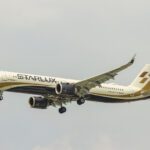
Why A Young Fleet Matters
For airlines, a young fleet is more than just a bragging point. Newer jets usually mean:
-
Lower fuel burn and operating costs
-
Fewer maintenance headaches
-
Lower CO₂ emissions
-
More modern, comfortable cabins for passengers
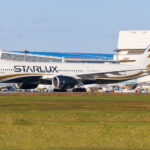
According to the 2025 Youngest Aircraft Fleet Award from ch-aviation, Taiwan’s STARLUX Airlines tops the global ranking with an average fleet age of around 3.2 years. That’s incredibly young by industry standards, especially for a carrier that already operates both short- and long-haul services.
Launched in 2020, STARLUX has quickly gone from “third player in Taiwan” to a serious premium contender, sitting alongside EVA Air and China Airlines but with a very different, boutique-style positioning.
Inside STARLUX’s All-Airbus Fleet
STARLUX flies a simple, all-Airbus fleet built around next-generation types:
-
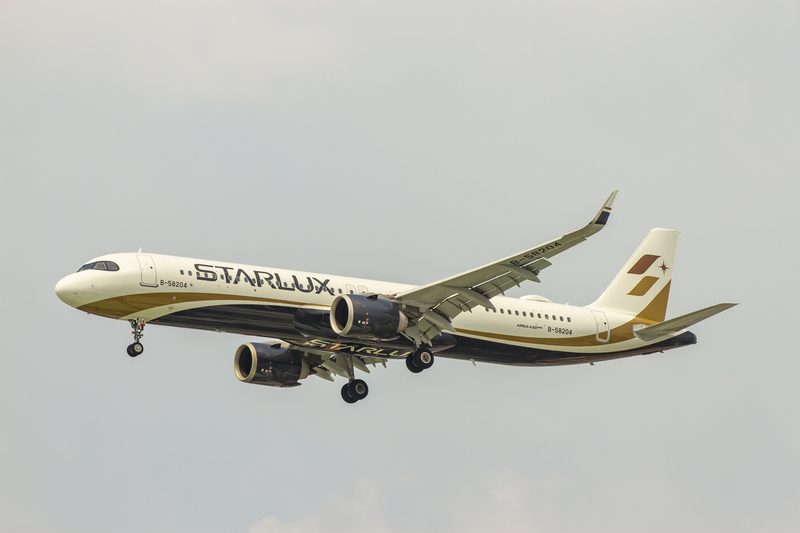
Airbus A321neo for regional and medium-haul routes
-
Airbus A330-900neo for regional widebody and medium/long-haul
-
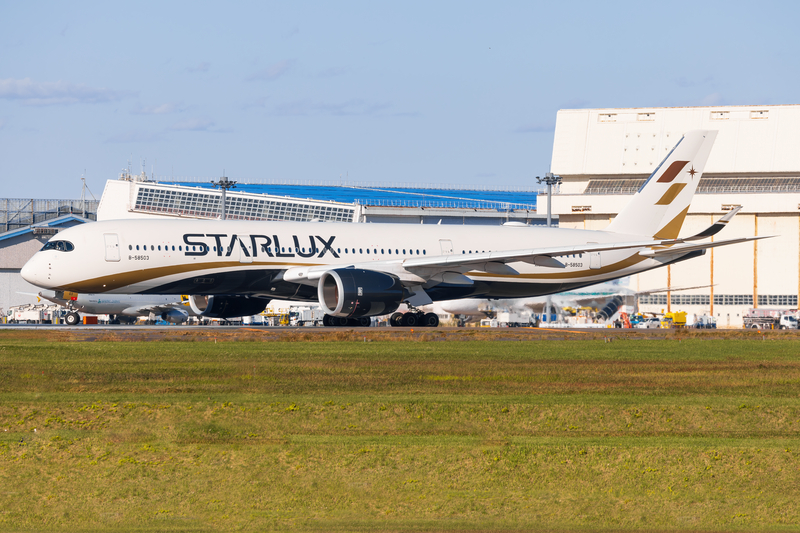
Airbus A350-900 for flagship long-haul services
The very first STARLUX aircraft was an A321neo (B-58201), delivered in October 2019 and entering service in January 2020. Today, that subfleet has grown to 13 aircraft, with six more on order. These jets typically feature:
-
188 seats total
-
8 in business class
-
180 in economy
-
The widebody side of the house is anchored by the A330-900neo and A350-900:
-
5× A330-900neo in service, with more on the way, configured with:
-
28 business class seats
-
269 economy seats
-
-
10× A350-900, averaging under two years old, used primarily on long-haul routes. These offer four cabin classes:
-
First
-
Business
-
Premium economy
-
Economy
-
On the long-haul flagship, the A350-900, STARLUX leans heavily into comfort and a premium feel, with full-flat seats in business, a distinct premium economy cabin, and a relatively spacious layout compared to typical high-density configurations.
To support its growth plans, STARLUX has also ordered A350-1000s and A350 Freighters, giving it both passenger and cargo expansion options for the next decade.
STARLUX Fleet Snapshot
At the time of writing, STARLUX’s fleet and orders can be summarized as:
| Aircraft Type | In Fleet | On Order | Avg. Age (approx.) | Notes / Capacity* |
|---|---|---|---|---|
| Airbus A321neo | 13 | 6 | 4.2–4.3 years | 188 seats (8 business; 180 economy) |
| Airbus A330-900neo | 5 | 6 | ~3.2 years | 297 seats (28 business; 269 economy) |
| Airbus A350-900 | 10 | – | ~1.8 years | 4 cabins: first, business, premium economy, economy |
| Airbus A350-1000 | 0 | 18 | – | Planned ~350-seat layout across four cabin classes |
| Airbus A350F | 0 | 10 | – | Freighter; payload up to ~111 tons |
*Seat counts and layouts based on current publicly described configurations.
In total, STARLUX operates 28 aircraft today, with dozens more in the pipeline. As those orders arrive, the airline will remain heavily Airbus-focused while expanding both range and capacity.
Growth Plans Hit By Airbus Delivery Delays
Of course, having a big order book and actually receiving the aircraft are two different things.
In 2025, STARLUX’s CEO Glenn Chai highlighted that supply chain issues and engine-related delays at Airbus have significantly slowed deliveries. Instead of the nine new aircraft originally expected in 2025, STARLUX now anticipates receiving only five.
That’s a serious dent in growth plans:
-
Planned capacity growth for 2025: ~50%
-
Now expected: closer to 20–30%
Airbus’ broader production delays, driven by shortages in structural components and engines, are affecting many airlines—but for a young, fast-growing carrier like STARLUX, the impact is especially noticeable. Fewer aircraft equals fewer new routes and slower frequency increases, at least in the short term.
Still, the airline clearly sees the A350-1000 and A330-900neo as the backbone of its future, with Chai calling the A350-1000 a “perfect fit” for long-haul efficiency, range, and passenger comfort.
From EVA Drama To 5-Star Boutique Airline
STARLUX has one of the more dramatic origin stories in modern aviation.
The airline was founded by Chang Kuo-wei, former chairman of EVA Air, who left after a family and boardroom power struggle following the death of EVA’s founder (and Chang’s father). In response, he set out to build what is essentially his vision of a “perfect airline” from scratch.
Key parts of the STARLUX identity:
-
Branded as a “boutique carrier” with a strong emphasis on luxury and service
-
Premium-heavy cabins with stylish interiors and thoughtful touches
-
A focus on hospitality and consistency across all cabin classes
Despite being only a few years old, STARLUX has already picked up some of the industry’s top accolades:
-
Skytrax 5-Star Airline rating (2025)
-
World’s Most Improved Airline
-
APEX Five-Star Global Airline designation for both 2025 and 2026
These ratings recognize not just hard product (seats, IFE, etc.) but also service consistency, something particularly impressive for a relatively new airline still in rapid expansion mode.
Where STARLUX Flies – And What’s Next
STARLUX’s network is still compact compared to the big legacy carriers, but it is growing quickly and strategically.
-
Current network:
-
33 routes to 29 destinations
-
Focus on East and Southeast Asia plus a handful of US West Coast destinations
-
-
Main hub:
-
Taiwan Taoyuan International Airport (TPE) – primary base and long-haul hub
-
-
Secondary base:
-
Taichung (RMQ) – leisure-focused routes (e.g., Phu Quoc, Da Nang, Macau)
-
-
Planned new base:
-
Kaohsiung (KHH) – future expansion into Southern Taiwan
-
On the long-haul side, STARLUX has already planted its flag on the US West Coast, with flights from Taipei to:
-
Los Angeles (LAX)
-
San Francisco (SFO)
-
Seattle (SEA)
-
Ontario, California (ONT), targeting the Inland Empire’s Asian diaspora
Looking forward, STARLUX plans to:
-
Launch Taipei–Phoenix (PHX) in early 2026 with the A350-900 (3–4 flights weekly)
-
Consider further US destinations like New York, Washington, Chicago, Dallas, and Houston
-
Begin European services, with Helsinki already cleared from a regulatory standpoint and Prague often mentioned as a likely candidate
To boost connectivity and fill those long-haul flights, STARLUX is also investing heavily in partnerships:
-
Interline agreement with American Airlines, improving access beyond Los Angeles (and soon Phoenix)
-
Expanded codeshare with Alaska Airlines, adding a dozen new destinations via Seattle and San Francisco
These partnerships let STARLUX plug into existing US domestic networks instead of building one itself.
Other Airlines With Very Young Fleets
While STARLUX tops the table, several other airlines also boast impressively young fleets.
According to the 2025 Youngest Aircraft Fleet Award, the top five looked like this (with ages updated to current figures):
| Rank | Airline | Country | First Flight | Fleet Size | Avg. Age (approx.) |
|---|---|---|---|---|---|
| 1 | STARLUX Airlines | Taiwan | 2020 | 28 | 3.2 years |
| 2 | KM Malta Airlines | Malta | 2024 | 8 | 4.2 years |
| 3 | Flyadeal | Saudi Arabia | 2017 | 41 | 4.8 years |
| 4 | Flynas | Saudi Arabia | 2007 | 65 | 5.2 years |
| 5 | Arajet | Dominican Republic | 2022* | 12 | 4.1 years |
*Arajet’s corporate origins date back to 2014 (as Dominican Wings), but it began flying as Arajet in 2022.
A quick snapshot of the competition:
-
KM Malta Airlines – the modern successor to Air Malta, operating a small but very young all-Airbus A320 family fleet.
-
Flyadeal – Saudia’s low-cost arm, with an all-A320 family narrowbody fleet and A330-900neos on the way.
-
Flynas – one of Saudi Arabia’s first private carriers, now a sizable all-Airbus operator with both narrowbodies and widebodies.
-
Arajet – the Dominican Republic’s fast-growing low-cost carrier, flying an all-Boeing 737 MAX fleet across the Americas.
All of these carriers benefit from lower fuel burn and maintenance costs thanks to their young fleets—but STARLUX still stands out in combining a very young fleet with a boutique, premium-focused brand.
Bottom Line
STARLUX Airlines is in a rare position: it’s tiny by global standards, yet it operates the youngest fleet in the world and has already joined the industry’s 5-star elite.
With:
-
An all-Airbus fleet averaging just over three years old
-
A healthy backlog of A321neo, A330-900neo, A350-900, A350-1000, and A350F orders
-
A growing network across Asia and the US West Coast
-
Strong premium branding and top-tier service ratings
…it’s setting itself up as a serious long-haul boutique competitor.
Airbus delivery delays are putting a temporary lid on how fast it can grow, but the long-term trajectory remains clear: more aircraft, more destinations, and more competition on key North America–Asia and future Europe–Asia routes.
For passengers, that means newer cabins, more route choice, and another high-quality option in an increasingly crowded transpacific market.