Dubai World Central Set To Become Emirates’ Mega-Hub By 2032
Dubai’s New Airport Vision Finally Has A Date
Dubai has now put a firm timeline on one of its most ambitious aviation projects: shifting major operations from Dubai International Airport (DXB) to Dubai Al Maktoum International Airport (DWC), also known as Dubai World Central.

After years of delays and mixed signals, the plan is for Emirates and flydubai to move their operations to DWC by 2032, turning it into the primary hub for the city and, if all goes to plan, the largest airport in the world by capacity.
From Overflow Field To Future Mega-Hub
DWC technically opened back in 2010, but it has never fulfilled its original promise. Instead of becoming Dubai’s primary passenger hub, it has mostly been used for:
-
Cargo operations
-
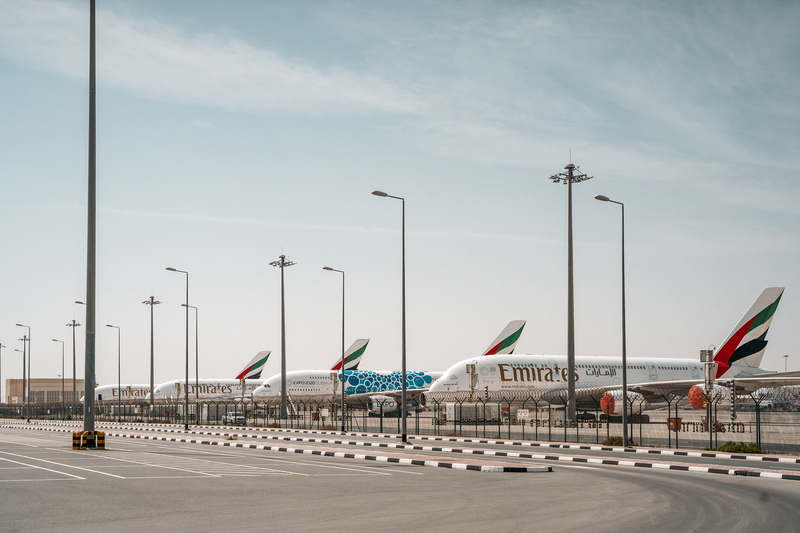
Aircraft storage and parking (especially during the pandemic, when it became a de facto A380 and 777 graveyard)
Meanwhile, DXB has grown into one of the busiest airports on the planet, regularly handling close to 100 million passengers a year and sitting just behind Atlanta in global rankings. That growth has kept the focus on DXB far longer than originally planned.
Over the years, the DWC timeline has repeatedly slipped:
-
Early plans imagined it fully operational by 2017
-
After the global financial crisis, that moved to 2027
-
In 2019, expansion was frozen amid slower growth and economic uncertainty
-
The pandemic pushed things even further into the future
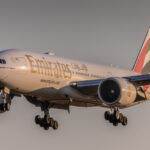
That stop–start pattern has now been replaced by a much clearer message: DWC is happening, and soon.
What The New Dubai Al Maktoum Mega-Hub Will Look Like
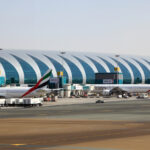
In April 2024, Dubai’s ruler approved a huge expansion at DWC, centered on brand-new passenger terminals with a budget of roughly 128 billion AED (~$35 billion). The numbers attached to the project are staggering:
-
Initial capacity: 150 million passengers per year
-
Ultimate capacity: up to 260 million passengers per year
-
Size: around 70 square kilometers — about five times larger than DXB
-
Runways: five parallel runways
-
Gates: up to 400 aircraft gates
-
Terminals: five passenger terminals
The airport won’t exist in isolation, either. It sits at the heart of the wider Dubai South development, which is planned to include:
-
Housing for around one million people
-
New commercial and logistics zones
-
Major upgrades to public transport links into the city and beyond
In effect, Dubai isn’t just building a bigger airport — it’s building an entire new aviation city around it.
ID 378295947 © Uladzimir Zuyeu | Dreamstime.com
Why Emirates And flydubai Need A New Home
DXB isn’t just busy; it’s close to physical and operational limits. Even holding traffic steady will get harder in the coming years as fleets evolve.
For Emirates, the shift to DWC is about both growth and replacement:
-
The airline currently relies heavily on the Airbus A380, which packs in huge numbers of passengers per movement
-
Emirates plans to retire the A380 fleet in the 2040s, replacing it with Boeing 777s, 787s, and Airbus A350s
-
These new jets are more efficient but smaller, meaning Emirates will need more flights and more aircraft movements to carry the same number of passengers
At the same time, flydubai is on its own aggressive growth path and is expected to operate hundreds of aircraft in the years ahead. Trying to support both carriers’ future schedules inside DXB’s existing footprint simply isn’t realistic.
That’s why the 2032 move date to DWC suddenly makes sense:
-
It gives enough time to build and commission the new facilities
-
It aligns with the delivery of large numbers of new aircraft for Dubai-based airlines
-
It ensures there’s room for both growth and fleet transition, instead of forcing everything into DXB’s already-tight constraints
How The Shift From DXB To DWC Could Play Out
Details of the transition plan haven’t been fully revealed yet, but given how connection-heavy Emirates’ network is, a slow, piecemeal move seems unlikely.
More realistically, we can expect something close to a hard switch over a single short window, with Emirates and flydubai:
-
Relocating the bulk of their operations to DWC in a tightly coordinated phase
-
Re-timing waves of banked connections to match the new infrastructure
-
Reworking ground operations, lounges, and crew bases around the new hub
Other hubs around the world have done similar “overnight” moves before, but doing it on this scale, with a network as globally integrated as Emirates’, will be a huge logistical challenge.
There’s also the question of what happens to DXB afterward. Even once Emirates leaves, DXB is unlikely to vanish — it could remain:
-
A key base for other carriers
-
A city airport focused on regional and point-to-point traffic
-
A potential home for low-cost operations or specific niche markets
But in terms of prestige and scale, DWC is clearly being positioned as Dubai’s primary global gateway going forward.
Chance To Fix A Weak Spot In Dubai’s Passenger Experience
For all of DXB’s success in terms of traffic, the passenger experience has started to lag compared to some rival hubs in the region. Crowding, older facilities in some areas, and sheer congestion make it less polished than newer airports nearby.
DWC offers Dubai a fresh start:
-
New terminal design tailored to modern connection flows
-
The opportunity to build truly world-class premium ground experiences from scratch
-
More space for lounges, quiet zones, and better-arranged transfer facilities
-
Infrastructure optimized around Emirates’ future fleet, rather than retrofitted onto an older layout
If executed well, this could allow Emirates to align its on-the-ground experience with the image it projects in the air — especially for premium passengers in business and first class.
Bottom Line
Dubai has finally put clear numbers and dates behind its long-discussed plan to shift major operations to Dubai Al Maktoum International Airport. By 2032, Emirates and flydubai are expected to call DWC home, with the airport initially capable of handling around 150 million passengers per year, and eventually up to 260 million.
With five parallel runways, hundreds of gates, and a new city rising around it, DWC is designed to be the world’s biggest and most capable hub. For Emirates and flydubai, the move isn’t optional — it’s the only way to keep growing and to adjust to smaller, more numerous long-haul aircraft as the A380 era winds down.
The project is huge, the timeline ambitious, and the transition will be complex. But if Dubai can pull it off, the next decade could redefine not just its own aviation landscape, but the global pecking order of mega-hubs.