9-Hour Flight To Nowhere: British Airways 787 Turns Back To London After Altimeter Fault
For passengers on British Airways Flight BA243, the trip to Mexico City turned into the rarest kind of long-haul frustration: a transatlantic crossing that ends right back where it began.
BA243, scheduled from London Heathrow (LHR) to Mexico City Benito Juárez International (MEX), spent nearly nine hours airborne on December 10 before returning to Heathrow—an operational decision reportedly tied to a radio altimeter problem on the Boeing 787-9 Dreamliner operating the flight.
BA243: LHR–MEX… And Then LHR Again
Flight tracking data shows BA243 departed London Heathrow (LHR) mid-afternoon local time, already running behind schedule. Instead of pressing on toward Mexico City (MEX), the 787-9 continued westbound across the North Atlantic for several hours before executing a wide turn and heading home.
The jet ultimately touched back down at Heathrow (LHR) late that evening, meaning customers spent most of a workday in the air—only to end up at the same arrivals hall they’d left earlier.
On the surface, “just divert” sounds simple. In reality, BA’s choice to return all the way to LHR rather than stop in Canada likely reflects the harsh math of long-haul disruption:

-
Maintenance capability: British Airways can troubleshoot and repair a 787 far faster at its home base at LHR than at a remote station.
-
Passenger handling: Hotels, rebooking desks, baggage support, and replacement crews are easier to mobilize at LHR.
-
Crew duty limits: A down-route diversion can strand the airplane and crew out of position, sometimes forcing a second disruption to reposition everyone legally.
Notably, one report pointed out that when the aircraft turned, the closest suitable airport was Iqaluit (YFB)—a capable field, but hardly a place where a major carrier has deep support on standby.

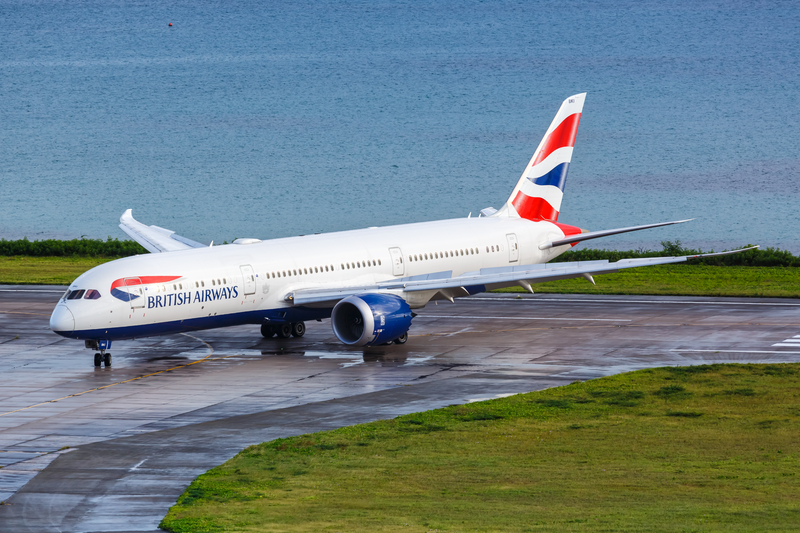
The Aircraft: British Airways Boeing 787-9, Registration G-ZBKR
The flight was operated by a Boeing 787-9 Dreamliner (G-ZBKR), part of BA’s long-haul fleet workhorse lineup.
Avgeek highlights of the 787-9 that matter in this context:
-
Powerplant: BA’s 787-9 fleet is powered by Rolls-Royce Trent 1000 engines.
-
Cabin environment: the Dreamliner is designed around a higher-humidity cabin and lower cabin altitude than older widebodies—great for comfort, though it doesn’t help when you’re returning to LHR.
-
Typical BA configuration: 216 seats across four cabins (First, Club World, World Traveller Plus, World Traveller). Depending on the specific tail’s layout, that’s potentially more than 200 customers suddenly needing hotels, meals, and rebooking.

What’s A Radio Altimeter—and Why Would It Trigger A Turnback?
British Airways described the event only as a “technical issue,” but multiple industry reports have pointed to a radio altimeter (RA) fault.
A quick, practical explainer:
-
A barometric altimeter tells you altitude relative to sea level (using air pressure).
-
A radio altimeter tells you height above the terrain directly below the aircraft (using radio waves), mainly at low altitude.
That RA input is deeply embedded in modern jet operations. It drives or supports things like:
-
autoland/approach modes and minimums (decision height callouts)
-
ground proximity warning logic (GPWS/EGPWS) and terrain-related alerts
-
flare and touchdown cues and other automation behaviors on certain aircraft types
Here’s where Mexico City (MEX) becomes relevant. MEX sits at roughly 7,316 feet / 2,230 meters above sea level—one of the highest major international airports in the world. High elevation changes performance margins, approach planning, and how crews manage automation and stabilized-approach criteria. If the aircraft’s RA is inoperative, it can restrict the crew’s ability to use certain approach capabilities and minima. Even if a landing might be technically possible, an airline’s procedures and the aircraft’s MEL (Minimum Equipment List) can make it operationally impractical—especially into a complex, high-altitude environment like MEX.
In other words: an RA fault isn’t automatically “unsafe,” but it can be dispatch-limiting for a long-haul mission where you want every system working exactly as advertised.
The Money Question: Is BA Looking At UK261 Compensation?
Because the flight originated at London Heathrow (LHR), passenger protections under UK261 are in play.
The big nuance: compensation is based on the delay to the passenger’s final destination—in this case, Mexico City (MEX)—not how long they spent on the “flight to nowhere.” If travelers were rebooked and arrived in MEX more than four hours late versus their original schedule, compensation can reach £520 per passenger on long-haul itineraries, unless the airline can show extraordinary circumstances.
Routine technical faults are often considered within an airline’s control under the rules—meaning compensation can still apply—though every case turns on specifics.
Even using conservative math:
-
200 passengers × £520 = £104,000 (before hotels, meals, and rebooking costs)
-
A full 216-seat load at £520 each would be £112,320
And that’s before duty-of-care expenses at LHR (hotel rooms, transport, meals, rebooking labor) pile on.
Bottom Line
British Airways Flight BA243 from London Heathrow (LHR) to Mexico City (MEX) turned into a nine-hour round trip back to Heathrow after a reported radio altimeter issue on the Boeing 787-9 Dreamliner (G-ZBKR). With the aircraft already well into the transatlantic crossing, BA opted to return to its home base—likely balancing maintenance capability, passenger reaccommodation, and crew legality against the limited practicality of a remote diversion. The fallout could be expensive: depending on rebooking outcomes, UK261 compensation plus duty of care for a widebody load can quickly climb into six figures.