2026’s Transatlantic Expansion Map: New U.S. Gateways, New Aircraft Choices, New Competitive Pressure
Airline schedules for 2026 are starting to look less like a simple “more capacity to the usual suspects” story—and more like a deliberate hunt for whitespace. Across the North Atlantic and adjacent long-haul corridors, carriers are opening city pairs that would have been hard sells a decade ago, then matching them with the right aircraft economics: next-generation narrowbodies (especially the Airbus A321XLR) where frequency and risk-control matter, and efficient widebodies (like the A330-900neo and 787 family) where stage length, cargo, and premium cabins can make a route work.
What’s driving it? A blend of post-pandemic demand durability, faster hub connectivity, and a sharper willingness to launch “thin” long-haul routes—while still trimming underperformers elsewhere. And with PLAY now out of the picture, the Icelandic low-cost connective model has left a gap that legacy carriers and joint ventures will gladly fill.
The New Playbook: Right-Sizing Long-Haul With the Aircraft, Not Just the Market
The most important shift isn’t the raw count of new routes—it’s the equipment strategy behind them.
-
A321XLR routes are where airlines want long-haul reach with narrowbody costs and the option to scale. The XLR’s range profile makes it a tool for “third airports,” corporate-heavy catchments, and markets that don’t justify a widebody every day.
-
A330-900neo deployments (with modern engines and strong long-haul economics) are showing up in places that used to be seasonal 767 territory—particularly where airlines want consistent premium product and belly cargo.
-
787-8/9 flying continues to anchor longer stage lengths and JV-heavy trunk routes, where cargo contribution and premium seats help stabilize yields.
-
And yes, the 757-200 is still very much alive on certain long-thin missions—proof that performance and fleet availability can matter as much as efficiency when the network plan has deadlines.

Seattle Is Becoming a Two-Airline Transatlantic Arena
Seattle/Tacoma (SEA) is one of the most strategically interesting battlegrounds in 2026 because it’s where “legacy transatlantic scale” and “new entrant ambition” collide.
Alaska Airlines is making the headline move: it’s going transatlantic from SEA with three Europe routes that immediately test different demand types:
-
SEA–London Heathrow (LHR) launches May 21, 2026, operated by the Boeing 787-9—a long-range widebody built for exactly this kind of mission, combining strong payload-range with a cabin environment passengers notice on 9–10 hour sectors.
-
SEA–Rome Fiumicino (FCO) follows May 28, 2026, also on the 787-9, a classic leisure-heavy market where network feed and summer demand peaks can carry the economics.
-
SEA–Reykjavík/Keflavík (KEF) starts May 28, 2026 on the Boeing 737-8 MAX, a notable choice because it signals confidence in modern narrowbody transatlantic ops on a relatively forgiving stage length. KEF’s geography makes it a natural “bridge” market where a narrowbody’s range and cost profile can align.
Then there’s Delta Air Lines, which is also adding SEA-Europe reach:
-
SEA–Barcelona (BCN) begins May 7, 2026 on the Airbus A330-900neo
-
SEA–Rome (FCO) begins May 6, 2026, also on the A330-900neo
That sets up a fascinating competitive dynamic: two airlines, two fleet philosophies, same hub, and overlapping Europe leisure demand—yet with very different network structures behind them. SEA is no longer just a West Coast “connector to Asia.” It’s becoming a true two-front gateway.
American Doubles Down on “New Europe,” and Quietly Debuts a New Era of Narrowbody Long-Haul
American Airlines’ 2026 adds are a mix of bold new destinations and fleet modernization. The attention grabber is route breadth, but the professional story is the aircraft mix.
-
Dallas/Fort Worth (DFW)–Athens (ATH) starts May 5, 2026 on the Boeing 787-9, a premium-friendly widebody with the legs for Eastern Med missions while keeping unit costs under control.
-
DFW–Zurich (ZRH) returns May 6, 2026 on the Boeing 777-200, a capacity statement into a high-yield corporate market with alliance connectivity.
-
Philadelphia (PHL)–Budapest (BUD) starts May 6, 2026 on the Boeing 787-8
-
PHL–Prague (PRG) starts May 7, 2026 on the Boeing 787-8
PHL is doing what it does best: leveraging strong transatlantic connectivity and JV alignment to sustain routes that don’t need daily A350 capacity to work.
Two additional moves stand out for aircraft and strategy:
-
New York (JFK)–Edinburgh (EDI) returns May 7, 2026 on the Airbus A321XLR. That’s not just a route announcement—it’s a statement that the XLR is going to reshape U.S.–Europe network design, allowing “right-sized” long-haul with a premium-heavy configuration and better frequency economics than a widebody in shoulder seasons.
-
JFK–Tel Aviv (TLV) is planned to resume March 2026 on the Boeing 777-200ER, a high-capability platform for a market where demand can be strong but operational and geopolitical variables require flexibility.
Delta’s 2026: A330neo Expansion, Niche Europe, and a Long-Haul Edge to Riyadh
Delta’s approach reads like a portfolio strategy: add headline routes, add niche leisure markets that competitors may ignore, and do it with aircraft that match the risk.
Key adds include:
-
Atlanta (ATL)–Riyadh (RUH) starts December 3, 2026 on the Airbus A350-900, a flagship long-haul aircraft with the range, payload, and product consistency to support a high-profile market.
-
Boston (BOS)–Madrid (MAD) begins May 21, 2026 on the A330-900neo
-
BOS–Nice (NCE) begins May 23, 2026 on the A330-900neo
Delta is also pushing into “niche Europe” from New York (JFK):
-
JFK–Malta (MLA) launches June 7, 2026 on the Boeing 767-300ER
-
JFK–Olbia (OLB) launches May 22, 2026 on the 767-300ER
-
JFK–Porto (OPO) launches May 21, 2026 on the 767-300ER
These are exactly the kinds of routes where a mid-capacity widebody can be the sweet spot: enough premium and belly cargo to support yields, without overexposing the airline to demand swings.
On Israel, Delta’s plan is to restore ATL–TLV and BOS–TLV, contingent on operational conditions, reflecting how major carriers are trying to rebuild schedules while retaining flexibility.
United’s Targeted Additions: Long-Thin Europe, Plus an Old Workhorse to Iceland
United Airlines is adding fewer routes than some peers, but the selection is telling: it’s leaning into under-served leisure and secondary European cities from Newark (EWR), where its hub connectivity does heavy lifting.
From EWR, United plans:
-
EWR–Bari (BRI) starting May 22, 2026 on a Boeing 767-300ER
-
EWR–Glasgow (GLA) starting May 21, 2026 on a Boeing 757-200
-
EWR–Palma de Mallorca (PMI) starting May 22, 2026 on a Boeing 757-200
-
EWR–Bilbao (BIO) starting May 22, 2026 on a Boeing 757-200
-
EWR–Madeira (FNC) starting June 7, 2026 on a Boeing 757-200
And from Washington Dulles (IAD):
-
IAD–Keflavík (KEF) begins May 21, 2026 on the Boeing 757-200
To aviation pros, the 757 detail matters: it’s an older airframe, but still uniquely capable for certain missions where runway performance, payload, and fleet availability align—and where an airline can’t (or won’t) allocate a newer widebody.
Foreign Carriers: The A321XLR Is a Route Generator, and New U.S. Cities Are Back in Play
Several non-U.S. carriers are using 2026 to add U.S. gateways and diversify beyond the usual JFK/MIA/ORD/LAX footprint.
-
Aer Lingus adds Dublin (DUB)–Raleigh/Durham (RDU) in April 2026, up to five weekly, on the Airbus A321XLR—a textbook example of how the XLR opens long-haul routes built around corporate and diaspora demand with manageable capacity. Aer Lingus also launches DUB–Pittsburgh (PIT) May 25, 2026, four weekly, on the Airbus A321neo LR.
-
British Airways launches London Heathrow (LHR)–St. Louis (STL) April 19, 2026, four weekly. STL becomes a new long-haul dot on the U.S. map, and the route sits neatly inside the Atlantic joint business ecosystem.
-
Etihad Airways launches Abu Dhabi (AUH)–Charlotte (CLT) May 4, 2026, four weekly, on the Boeing 787 Dreamliner—and CLT’s banking, corporate traffic, and connectivity profile make this far more than a leisure experiment.
-
Iberia launches Madrid (MAD)–Newark (EWR) March 29, 2026, daily, on the Airbus A321XLR, explicitly positioning the aircraft as its most efficient tool for transatlantic growth while adding a third New York-area frequency.
-
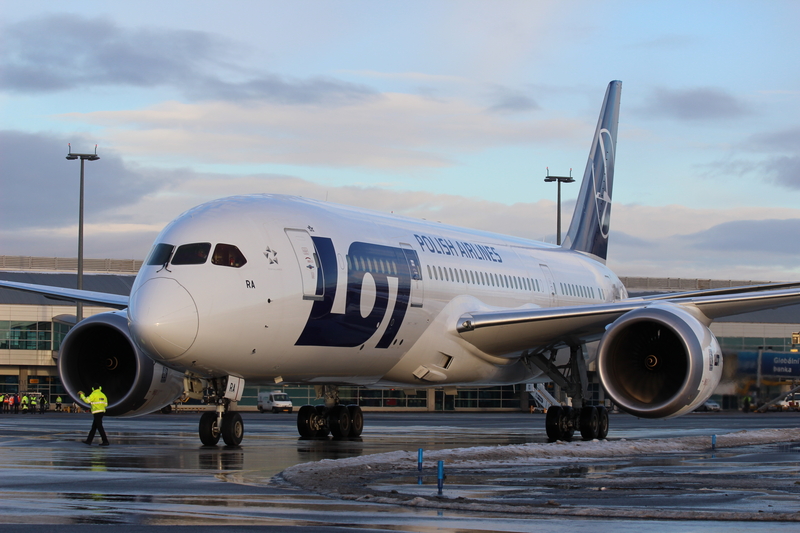
LOT Polish Airlines launches Warsaw (WAW)–San Francisco (SFO) May 6, 2026, four weekly, using Boeing 787 Dreamliner equipment—giving SFO a new Central/Eastern Europe nonstop option with broad connection utility over WAW.
-
Royal Jordanian launches Amman (AMM)–Dallas/Fort Worth (DFW) in May 2026, four weekly, on the Boeing 787-8—a long-haul oneworld-aligned move that plugs directly into American’s DFW hub feed.
-
Royal Air Maroc is set to launch Casablanca (CMN)–Los Angeles (LAX) starting June 7, 2026, three weekly. Beyond being a new route, it restores Africa connectivity from LAX after Ethiopian ended its Los Angeles Africa service in 2019—making this a meaningful network milestone, not just another dot on the route map.
Bottom Line
2026 route launches aren’t simply about chasing volume; they’re about matching aircraft capability to market risk. The A321XLR is turning “maybe someday” city pairs into scheduled reality. The A330-900neo and 787 family are letting airlines scale premium long-haul while keeping unit costs disciplined. And hubs like SEA, EWR, PHL, and DFW are becoming even more strategically valuable as carriers widen their long-haul reach with targeted, aircraft-driven precision.